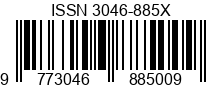
e-ISSN: 3046-885X
DOI prefix: 10.22373
Frequency: June and December
Licence: CC BY-SA 4.0
Fees: Rp0 (no fees)

IJES : Indonesian Journal of Environmental Sustainability takes every allegation of research or publication misconduct seriously, whether it concerns a submitted manuscript or a published article. Allegations are handled confidentially and fairly, following the flowcharts of the Committee on Publication Ethics (COPE).
| Fabrication | Making up data or results. |
|---|---|
| Falsification | Manipulating materials, equipment, processes, data, or images so that the research is not accurately represented. |
| Plagiarism | Using another person's work or ideas without credit (see Plagiarism Policy). |
| Duplicate publication | Publishing the same work, or substantially the same work, more than once. |
| Authorship misconduct | Guest, gift, or ghost authorship; disputes over contribution (see Authorship). |
| Undisclosed conflict of interest or AI use | Failure to declare interests or AI use as required. |
| Manipulation | Citation manipulation, peer review manipulation, or manipulation of metadata or publication dates. |
| Ethical approval | Research with humans or animals without the required ethical approval (see Research Ethics). |
Send a description of the concern and any supporting evidence to ijes.uin@ar-raniry.ac.id. Anonymous reports are considered when they include enough verifiable evidence. The identity of the person reporting is kept confidential.
The journal acts on misconduct found in its published articles even when it is identified long after publication.
Related: Publication Ethics · Post-publication Discussion
e-ISSN: 3046-885X
DOI prefix: 10.22373
Frequency: June and December
Licence: CC BY-SA 4.0
Fees: Rp0 (no fees)










Center for Environmental Studies,
Universitas Islam Negeri Ar-Raniry Banda Aceh
All articles are available under the Creative Commons Attribution-ShareAlike 4.0 International License.

Museum Building,
Universitas Islam Negeri Ar-Raniry Banda Aceh
Jl. Syeikh Abdul Rauf, Kopelma Darussalam
Banda Aceh 23111, Aceh, Indonesia
Email: ijes.uin@ar-raniry.ac.id
