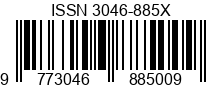
e-ISSN: 3046-885X
DOI prefix: 10.22373
Frequency: June and December
Licence: CC BY-SA 4.0
Fees: Rp0 (no fees)

A conflict of interest exists when a financial, professional, or personal relationship could influence, or appear to influence, how a person writes, reviews, or decides on a manuscript. IJES : Indonesian Journal of Environmental Sustainability requires every author, reviewer, and editor to declare such interests.
Funding, employment, consultancy, shares, patents, or fees related to the subject of the work.
Close collaboration, competition, or shared institution with the authors; involvement in a project assessed in the manuscript.
Family ties, friendship, or personal disagreement with the authors.
Authors declare all relevant interests and all sources of funding in the Conflict of Interest and Funding statements of the manuscript. If there are none, the statement reads: "The authors declare no conflict of interest." The role of funders in study design, data collection, analysis, and the decision to publish must be stated.
Reviewers decline the invitation if they have a conflict of interest, or inform the editor when they become aware of one during the review. Reviewers do not use unpublished information from the manuscript for their own work.
Conflicts found after submission or publication are handled under the Research Misconduct policy and, after publication, may lead to a correction.
Related: Publication Ethics · Peer Review Process
e-ISSN: 3046-885X
DOI prefix: 10.22373
Frequency: June and December
Licence: CC BY-SA 4.0
Fees: Rp0 (no fees)










Center for Environmental Studies,
Universitas Islam Negeri Ar-Raniry Banda Aceh
All articles are available under the Creative Commons Attribution-ShareAlike 4.0 International License.

Museum Building,
Universitas Islam Negeri Ar-Raniry Banda Aceh
Jl. Syeikh Abdul Rauf, Kopelma Darussalam
Banda Aceh 23111, Aceh, Indonesia
Email: ijes.uin@ar-raniry.ac.id
