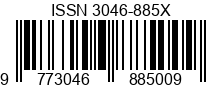
e-ISSN: 3046-885X
DOI prefix: 10.22373
Frequency: June and December
Licence: CC BY-SA 4.0
Fees: Rp0 (no fees)

This policy sets out how authors, editors, and peer reviewers of IJES : Indonesian Journal of Environmental Sustainability may and may not use artificial intelligence (AI) tools, including generative AI and AI-assisted technologies, at every stage of writing, editing, and peer review.
Tools used only for spelling checks or reference management (for example, Mendeley or Zotero) do not require disclosure.
Every manuscript must contain a Declaration of AI Use placed before the References section. If no AI tool was used, the declaration states this.
Example: AI used
"During the preparation of this manuscript, the authors used [tool name, version] to [specific purpose, e.g., improve the readability of the English text]. The authors reviewed and edited all output and take full responsibility for the content of this article."
Example: no AI used
"The authors declare that no generative AI or AI-assisted tools were used in the preparation of this manuscript."
Reviewers must not use AI tools at any point in the peer review process. This includes analysing or evaluating a manuscript, drafting or polishing review comments, and entering, uploading, or pasting any part of a manuscript into an AI application.
Reviewers who suspect undisclosed AI use, fabricated data, or non-existent references should inform the handling editor in their report.
Suspected breaches are handled under the Publication Ethics policy. Depending on the stage and severity, outcomes include a request for correction, rejection, or correction or retraction of a published article.
Related: Publication Ethics · Peer Review Process · Author Guidelines · Plagiarism Policy
e-ISSN: 3046-885X
DOI prefix: 10.22373
Frequency: June and December
Licence: CC BY-SA 4.0
Fees: Rp0 (no fees)










Center for Environmental Studies,
Universitas Islam Negeri Ar-Raniry Banda Aceh
All articles are available under the Creative Commons Attribution-ShareAlike 4.0 International License.

Museum Building,
Universitas Islam Negeri Ar-Raniry Banda Aceh
Jl. Syeikh Abdul Rauf, Kopelma Darussalam
Banda Aceh 23111, Aceh, Indonesia
Email: ijes.uin@ar-raniry.ac.id
