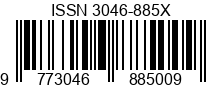
e-ISSN: 3046-885X
DOI prefix: 10.22373
Frequency: June and December
Licence: CC BY-SA 4.0
Fees: Rp0 (no fees)

This policy defines who qualifies as an author of an article in IJES : Indonesian Journal of Environmental Sustainability, the role of the corresponding author, and how changes to authorship are handled.
Each person listed as an author must meet all of the following:
Everyone who meets these criteria must be listed as an author. The journal does not set a maximum number of authors. People who contributed but do not meet all criteria (for example, technical help, field assistance, language editing, or general supervision) are named in the Acknowledgements with their consent.
Listing a person who did not meet the criteria, for example because of their position or reputation.
Leaving out a person who meets the criteria.
AI tools cannot be authors (see AI Policy).
Every article includes an Author Contributions statement describing the role of each author. The journal recommends the CRediT taxonomy, for example: Conceptualization, Methodology, Investigation, Formal analysis, Writing – original draft, Writing – review & editing, Supervision.
The corresponding author communicates with the journal on behalf of all authors, makes sure that all authors have approved the submission and every revision, and ensures that the declarations are complete and correct.
Authorship disputes are handled under the Research Misconduct policy. The journal does not decide disputes itself and may refer them to the authors' institutions.
Related: Publication Ethics · Conflict of Interest · Author Guidelines
e-ISSN: 3046-885X
DOI prefix: 10.22373
Frequency: June and December
Licence: CC BY-SA 4.0
Fees: Rp0 (no fees)










Center for Environmental Studies,
Universitas Islam Negeri Ar-Raniry Banda Aceh
All articles are available under the Creative Commons Attribution-ShareAlike 4.0 International License.

Museum Building,
Universitas Islam Negeri Ar-Raniry Banda Aceh
Jl. Syeikh Abdul Rauf, Kopelma Darussalam
Banda Aceh 23111, Aceh, Indonesia
Email: ijes.uin@ar-raniry.ac.id
