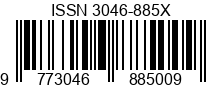
e-ISSN: 3046-885X
DOI prefix: 10.22373
Frequency: June and December
Licence: CC BY-SA 4.0
Fees: Rp0 (no fees)

IJES : Indonesian Journal of Environmental Sustainability keeps the scholarly record accurate. When a published article contains errors or is found to be unreliable, the journal publishes a correction, an expression of concern, or a retraction, following the retraction guidelines of the Committee on Publication Ethics (COPE).
| Notice | When it is used |
|---|---|
| Correction | An error that affects part of the article (for example, a value, a figure, an affiliation, or an author name) but not its main conclusions. |
| Expression of concern | Serious doubts about the reliability of an article while an investigation is still in progress. |
| Retraction | Clear evidence that the findings are unreliable (because of misconduct or honest error), plagiarism, duplicate publication, unethical research, or serious undeclared conflict of interest. |
Related: Research Misconduct · Post-publication Discussion · Publication Ethics
e-ISSN: 3046-885X
DOI prefix: 10.22373
Frequency: June and December
Licence: CC BY-SA 4.0
Fees: Rp0 (no fees)










Center for Environmental Studies,
Universitas Islam Negeri Ar-Raniry Banda Aceh
All articles are available under the Creative Commons Attribution-ShareAlike 4.0 International License.

Museum Building,
Universitas Islam Negeri Ar-Raniry Banda Aceh
Jl. Syeikh Abdul Rauf, Kopelma Darussalam
Banda Aceh 23111, Aceh, Indonesia
Email: ijes.uin@ar-raniry.ac.id
