e-ISSN: 3046-885X
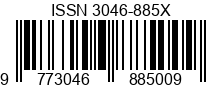
DOI prefix: 10.22373
Frequency: June and December
Licence: CC BY-SA 4.0
Fees: Rp0 (no fees)

IJES : Indonesian Journal of Environmental Sustainability publishes only original work. Every submitted manuscript is checked for similarity with Turnitin before peer review, and again before publication when the text has changed substantially.
Maximum overall similarity: 20%, calculated with references and quotations excluded. A score below 20% does not by itself confirm originality: the editor also reads the report for large overlaps with a single source.
| Finding | Action |
|---|---|
| Similarity at or below 20%, with no significant overlap with a single source | The manuscript continues to peer review. |
| Similarity above 20%, or significant overlap with a single source, without intent to deceive | The manuscript is returned to the authors for rewriting and correct citation before review. |
| Substantial copying, duplicate publication, or translated plagiarism | The manuscript is declined. The editor may inform the authors' institution. |
| Plagiarism found after publication | Handled under the Correction and Retraction policy; the outcome may be a correction or a retraction. |
Authors confirm at submission that the manuscript is original, has not been published before, and is not under review elsewhere. Material from other sources, including the authors' own earlier work, must be cited. Text produced by AI tools is governed by the AI Policy.
Related: Publication Ethics · Research Misconduct · Peer Review Process
e-ISSN: 3046-885X
DOI prefix: 10.22373
Frequency: June and December
Licence: CC BY-SA 4.0
Fees: Rp0 (no fees)










Center for Environmental Studies,
Universitas Islam Negeri Ar-Raniry Banda Aceh
All articles are available under the Creative Commons Attribution-ShareAlike 4.0 International License.

Museum Building,
Universitas Islam Negeri Ar-Raniry Banda Aceh
Jl. Syeikh Abdul Rauf, Kopelma Darussalam
Banda Aceh 23111, Aceh, Indonesia
Email: ijes.uin@ar-raniry.ac.id
