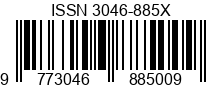
e-ISSN: 3046-885X
DOI prefix: 10.22373
Frequency: June and December
Licence: CC BY-SA 4.0
Fees: Rp0 (no fees)

These guidelines explain how to prepare a manuscript for IJES : Indonesian Journal of Environmental Sustainability. Please read them together with the article template. Manuscripts that do not follow these guidelines are returned to the authors before review.
Contents: General requirements · Article types · Structure · Title, authors, abstract · Main text · Declarations · References (APA) · Format · Submission checklist
| Type | Description | Structure |
|---|---|---|
| Research article | Original empirical study (field, laboratory, survey, or modelling). | Introduction, Methods, Results and Discussion, Conclusion |
| Conceptual article | Original argument or framework built on critical analysis of the literature, with the authors' own contribution. | Introduction, Discussion (in thematic sections), Conclusion |
| Book review | Critical review of a recent book within the scope. | Free structure |
Maximum length: 20 pages in the journal template, including tables, figures, and references.
Concise and specific, and states the main finding where possible. Avoid naming the study location unless the location is central to the findings. Articles in Indonesian or Arabic also give the title in English.
Full names without academic titles or positions; family names are not abbreviated. Give the full institutional affiliation (department, faculty, institution, city, country) and the email of the corresponding author.
One paragraph, maximum 200 words, covering background, aim, methods, main results, and conclusion. No citations, figures, tables, or uncommon abbreviations.
Three to five words or phrases that reflect the main concepts and help search engines find the article.
Review recent, relevant studies (state of the art), state clearly the research gap or the novelty of the work, and end with the aim of the study.
Describe the methods in enough detail for others to repeat the study: study area or materials, sampling, instruments, analytical procedures, and statistical or modelling methods with software and versions. Studies involving humans or animals report ethical approval (see Declarations).
Present the key findings with clear data, then interpret them in relation to theory and compare them critically with recent studies, stating where the results confirm or differ from earlier work.
Answer the aim of the study, state the main new finding, and, where relevant, give implications or recommendations. Do not introduce new discussion.
Place the following statements after the Conclusion and before the References:
| Statement | Content |
|---|---|
| Author Contributions | Role of each author, for example conceptualisation, fieldwork, analysis, writing (see Authorship). |
| Funding | Funder and grant number, or "This research received no external funding." |
| Conflict of Interest | Any competing interest, or "The authors declare no conflict of interest." |
| Declaration of AI Use | Tool, version, and purpose, or a statement that no AI tool was used (see AI Policy). |
| Data Availability | Where the data supporting the findings can be accessed, or why they cannot be shared (see Data Availability). |
| Ethical Approval | For research involving humans or animals: committee name, approval number, and year. For low or negligible risk research: the authors' statement of compliance with research ethics (see Research Ethics). |
In-text citation
(Karim & Bhat, 2009) · (Lin et al., 2017) · Olsen et al. (2014) reported that…
Journal article
Karim, A. A., & Bhat, R. (2009). Fish gelatin: Properties, challenges, and prospects as an alternative to mammalian gelatins. Food Hydrocolloids, 23(3), 563–576. https://doi.org/10.1016/j.foodhyd.2008.07.002
Book chapter
Author, A. A. (Year). Title of chapter. In E. E. Editor (Ed.), Title of book (pp. xx–xx). Publisher. https://doi.org/xxxx
Thesis or dissertation
Author, A. A. (Year). Title of thesis [Master's thesis, Name of Institution]. Repository name. URL
Related: Peer Review Process · Publication Ethics · Copyright
e-ISSN: 3046-885X
DOI prefix: 10.22373
Frequency: June and December
Licence: CC BY-SA 4.0
Fees: Rp0 (no fees)










Center for Environmental Studies,
Universitas Islam Negeri Ar-Raniry Banda Aceh
All articles are available under the Creative Commons Attribution-ShareAlike 4.0 International License.

Museum Building,
Universitas Islam Negeri Ar-Raniry Banda Aceh
Jl. Syeikh Abdul Rauf, Kopelma Darussalam
Banda Aceh 23111, Aceh, Indonesia
Email: ijes.uin@ar-raniry.ac.id
